Goldstone Gallery
Goldstone Gallery
  • Sign In
  • Create Account

  • Orders
  • My Account
  • Signed in as:

  • filler@godaddy.com


  • Orders
  • My Account
  • Sign out

Signed in as:

filler@godaddy.com

  • Home
  • About
  • Contact
  • Current Exhibitions
    • Ramak Bamzar
    • October 7
  • Past Exhibitions
    • Badiucao
    • Nina Sanadze
    • Sarah Mottram
    • Ilan El
    • Ilana Razbash
    • Olga Horak
    • This is Navalny
  • Newsletter | Substack
  • Store
  • Media
  • Events
    • Selected Past Events
  • Shop

Account


  • Orders
  • My Account
  • Sign out


  • Sign In
  • Orders
  • My Account

Ramak Bamzar

The Body as Revolution

    Exhibition Dates: 8 February – 29 March, 2026


    Opening Event: Sunday 8 February, 1–4pm

    Book Your Opening Event Tickets Here

    Opening Hours: Thursdays: 7–9 pm; Sundays: 1–3 pm
    Book Your Tickets To Visit Here


    Ramak Bamzar’s The Body as Revolution presents a series of photographic works in which the human body emerges as witness to political rupture and survival.


    This work is built on a simple, devastating fact: the scale of killing exceeds the capacity of images.


    During the recent uprisings in Iran, tens of thousands of people were killed in a short period. Bodies were numbered. Some names were recorded. Many identities remain unknown. In most cases, no photographs exist.


    The photographs on this wall represent only a fraction of those deaths. They are neither representative nor complete. Some numbers correspond to images; many do not. In these cases, the body exists only as a number or a name recorded elsewhere, without a visible face.


    This wall is not unfinished.
    It is behind.


    There is no space, physically or ethically, to display the full scale of loss. Images end where the violence continues. The index book records what the wall cannot hold.


    Alongside this installation, a photographic series Pro Femina Series (2023–ongoing) made during the Woman, Life, Freedom movement documents the living body before disappearance, before numbering, before erasure. Together, these works trace the body as the primary site through which revolution passes, marked, exposed, and, in many cases, removed from visibility.


    Born from women’s bodies, through their visibility, their vulnerability, and their refusal, Pro Femina documents how no body remained untouched as the struggle for freedom unfolded. Women, men, children, all became part of the same rupture. In these works, the body carries loss, memory, and resistance. The body is not an image of revolution; it is its living remainder.


    This work does not seek resolution. It bears witness to a catastrophe whose magnitude cannot be fully seen.


    For artists and audiences within the Iranian diaspora, the responsibility to preserve memory has become urgent. When information is restricted and testimony cannot circulate freely, cultural spaces carry the burden of remembrance. Art becomes a means of safeguarding stories at risk of disappearance, preserving testimony where news cannot reach. The Body as Revolution insists on the presence of the body as the enduring remainder of history, bearing loss, memory, and the stubborn will to continue.
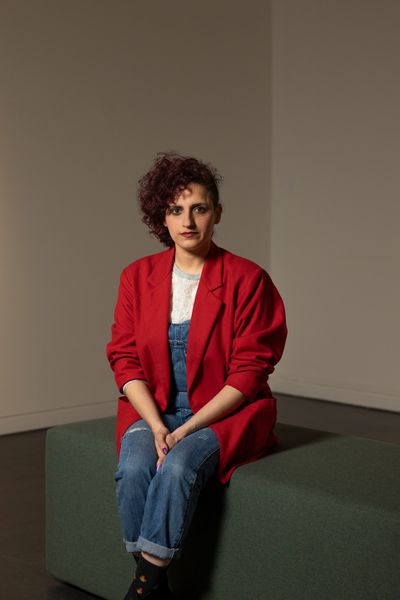
    About the Artist

    Born in Tehran and now based in Naarm/Melbourne, Ramak Bamzar is a visual artist and fine-art photographer whose practice centres on the body, memory, and identity, exploring how social and political forces shape lived experience. With a precise and poetic approach, she uses the image to register the tension between vulnerability and resistance. Alongside her visual practice, she is an emerging writer whose work reflects on the body, memory, and human experience under conditions of pressure and transformation.


    Emerging from lived experience and collective memory, her works speak to decades of repression endured by Iranian civilians, where dissent has been repeatedly suppressed and protests met with state retaliation. Cycles of imprisonment and execution have silenced generations of dissidents, while coercive control over personal freedoms continues to police daily life. Recent unrest has again revealed the brutal consequences of state violence, compounded by deliberate internet shutdowns that prevent documentation and isolate communities from global attention.

    Image: Ramak Bamzar portrait by Charlie Kinross 2024.

    Goldstone Gallery acknowledges the traditional owners of this land and pays respect to their elders; past, present, and emerging.


    Copyright © 2025 Goldstone Gallery - All Rights Reserved.

    • Home
    • About
    • Contact
    • Ramak Bamzar
    • October 7
    • Badiucao
    • Nina Sanadze
    • Sarah Mottram
    • Ilan El
    • Ilana Razbash
    • Olga Horak
    • This is Navalny
    • Store
    • Media
    • Selected Past Events

    This website uses cookies.

    We use cookies to analyze website traffic and optimize your website experience. By accepting our use of cookies, your data will be aggregated with all other user data.

    DeclineAccept